CCXT is valuable because it reduces exchange-specific plumbing, but production bots still need a thin internal adapter to standardize symbols, errors, and order lifecycle events.
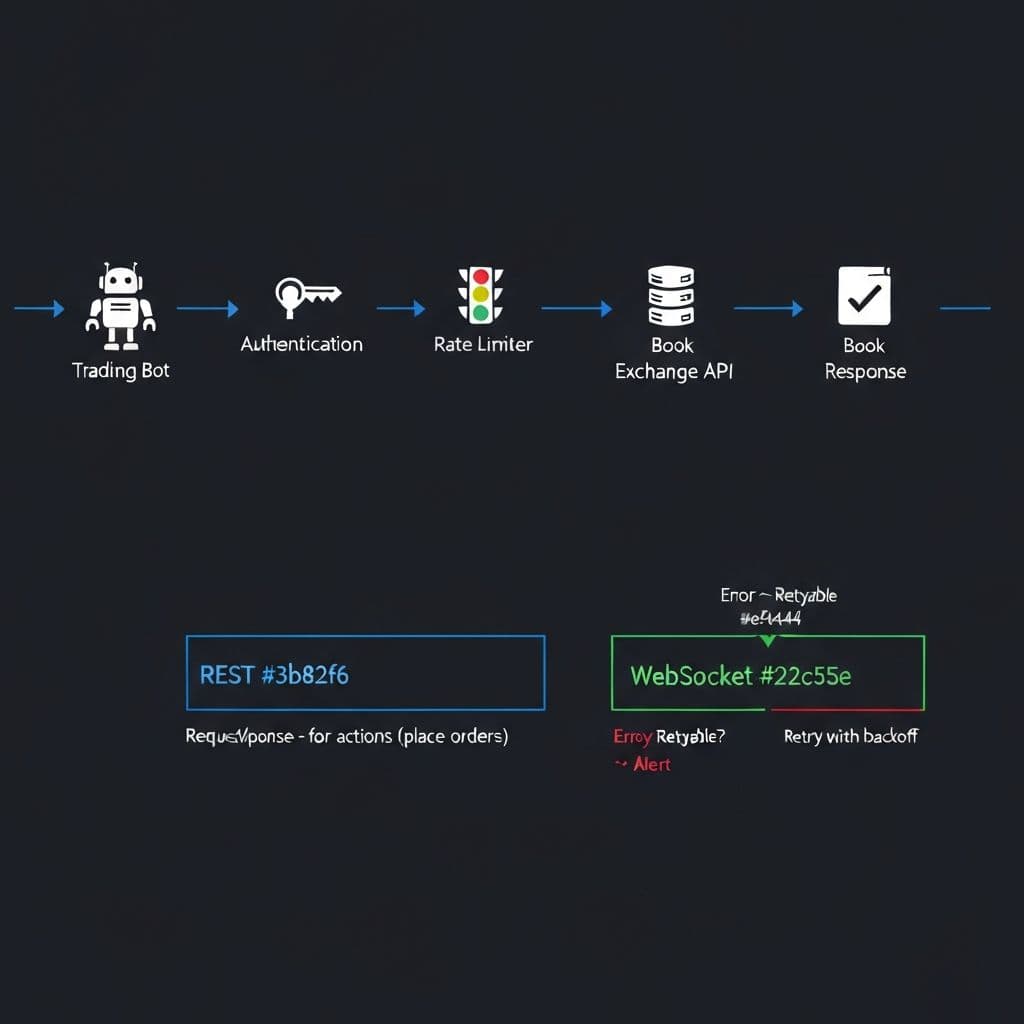
Recommended Adapter Structure
- Client factory for authenticated exchange instances.
- Symbol mapper from internal symbol format to venue format.
- Unified order object for create, cancel, and status transitions.
- Error normalization layer with retry classifications.
QuantumEdge
Explore these ideas in live bot templates
See how this setup translates into production-ready workflows.
Browse QuantumEdge bot templatespython
import ccxt

def make_exchange(exchange_id: str, api_key: str, secret: str):
    klass = getattr(ccxt, exchange_id)
    return klass({
        "apiKey": api_key,
        "secret": secret,
        "enableRateLimit": True,
        "options": {"defaultType": "spot"},
    })

def to_internal_order(order: dict) -> dict:
    return {
        "id": order.get("id"),
        "symbol": order.get("symbol"),
        "side": order.get("side"),
        "status": order.get("status"),
        "filled": order.get("filled", 0),
        "remaining": order.get("remaining", 0),
    }
Rate Limits and Retries
Even with CCXT rate limiting enabled, you need an application-level budget per exchange and per route. Treat read and write quotas separately and keep circuit-breaker metrics.
- Retry transient network errors with jittered backoff.
- Do not blindly retry order creation on ambiguous responses.
- Persist idempotency keys for order submissions.
- Log raw exchange payloads for reconciliation and audits.